
Next.js End of Life - Dates and Lifecycle
Next.js is a full-stack React framework by Vercel for building server-rendered and statically generated web applications, one of the most widely used React frameworks.
Last updated 2 August 2026
8
Versions tracked
6
At EOL
2
Supported
All versions
| Version | Released | Security Support | Latest |
|---|---|---|---|
|
16
|
22 Oct 2025 |
Active
|
16.2.9
09 Jun 2026
|
|
15
|
21 Oct 2024 |
21 Oct 2026
Ends in 2 months, 2 weeks
|
15.5.19
01 Jun 2026
|
|
14
|
26 Oct 2023 |
26 Oct 2025
Ended 9 months, 1 week ago
|
14.2.35
11 Dec 2025
|
|
13
|
25 Oct 2022 |
21 Dec 2024
Ended 1 year, 7 months ago
|
13.5.11
27 Mar 2025
|
|
12
|
26 Oct 2021 |
21 Nov 2022
Ended 3 years, 8 months ago
|
12.3.7
28 Mar 2025
|
|
11
|
15 Jun 2021 |
27 Jan 2022
Ended 4 years, 6 months ago
|
11.1.4
27 Jan 2022
|
|
10
|
27 Oct 2020 |
15 Jun 2021
Ended 5 years, 1 month ago
|
10.2.3
24 May 2021
|
|
9
|
08 Jul 2019 |
27 Oct 2020
Ended 5 years, 9 months ago
|
9.5.5
10 Oct 2020
|
About Next.js
Next.js is a full-stack React framework built by Vercel, providing server-side rendering, static site generation, and routing for building production web applications. It's one of the most widely used React frameworks, and Vercel formalized an explicit Long Term Support policy for it starting with version 14.
Next.js Lifecycle Explained
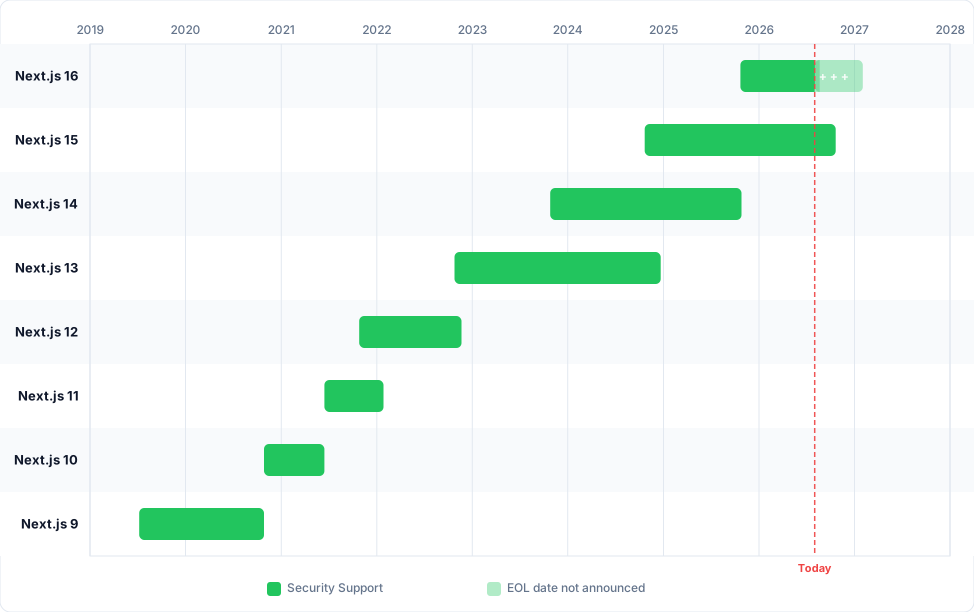
Under the current policy, a major version enters Active LTS immediately upon release, receiving new features, bug fixes, and security patches until the next major version ships. It then moves to Maintenance LTS, receiving only critical bug fixes and essential security updates. Maintenance LTS runs for two years from the version's original release date, not two years from when maintenance began, so a delayed successor doesn't extend the previous version's support window. Versions before 14 predate this formal policy and followed a less structured support timeline.
Frequently Asked Questions
Is Next.js still good in 2026?
Yes, it remains one of the most widely adopted React frameworks, with active development, a formal LTS policy since version 14, and regular releases on both its Active and Maintenance LTS lines.
Is Next.js obsolete?
No. Version 16 is under active development as the current Active LTS release, and the project maintains a defined, published support policy rather than an informal or stalled release cadence.
Is Next.js 14 still supported?
No. Next.js 14 reached end of life in October 2025, two years after its original release, and no longer receives updates.
Is Next.js 15 stable now?
Yes. Next.js 15 has moved into Maintenance LTS, meaning it only receives critical bug fixes and essential security updates rather than active feature development, which is generally a more stable, lower-churn phase than a version still in Active LTS.