
Node.js End of Life - Dates and Lifecycle
Node.js is a JavaScript runtime built on Chrome's V8 engine, widely used for building backend APIs, microservices, and command-line tools outside the browser.
Last updated 6 September 2026
25
Versions tracked
22
At EOL
3
Supported
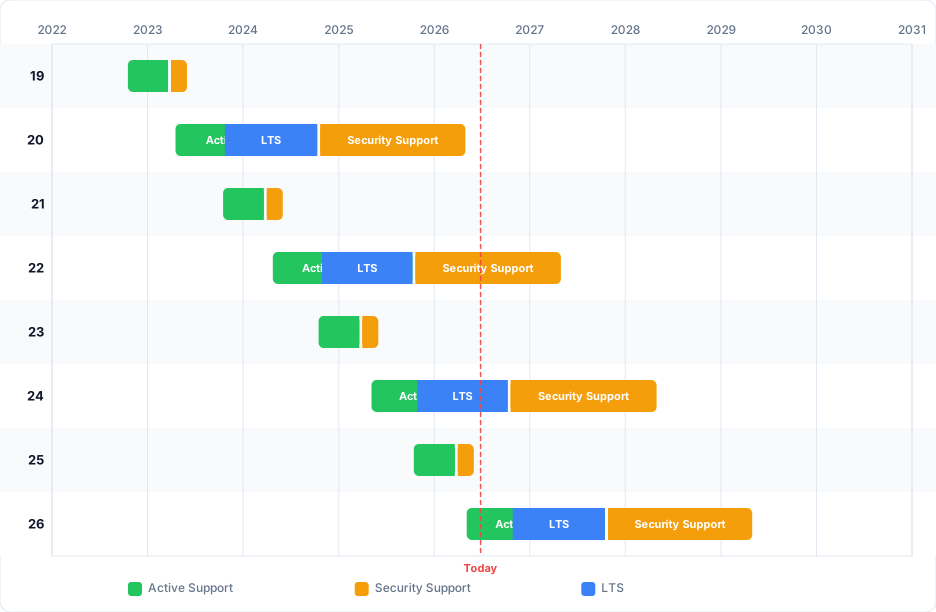
All versions
| Version | Released | Active Support | Security Support | Latest |
|---|---|---|---|---|
|
26
|
05 May 2026 |
27 Oct 2027
Ends in 1 year, 1 month
|
30 Apr 2029
Ends in 2 years, 7 months
|
26.10.0
22 Sep 2026
|
|
25
|
15 Oct 2025 |
01 Apr 2026
Ended 5 months, 3 weeks ago
|
01 Jun 2026
Ended 3 months, 3 weeks ago
|
25.9.0
01 Apr 2026
|
|
24
LTS
|
06 May 2025 |
20 Oct 2026
Ends in 3 weeks
|
30 Apr 2028
Ends in 1 year, 7 months
|
24.21.0
08 Sep 2026
|
|
23
|
16 Oct 2024 |
01 Apr 2025
Ended 1 year, 5 months ago
|
01 Jun 2025
Ended 1 year, 3 months ago
|
23.11.1
14 May 2025
|
|
22
LTS
|
24 Apr 2024 |
21 Oct 2025
Ended 11 months, 1 week ago
|
30 Apr 2027
Ends in 7 months, 1 week
|
22.23.3
23 Sep 2026
|
|
21
|
17 Oct 2023 |
01 Apr 2024
Ended 2 years, 5 months ago
|
01 Jun 2024
Ended 2 years, 3 months ago
|
21.7.3
10 Apr 2024
|
|
20
LTS
|
18 Apr 2023 |
22 Oct 2024
Ended 1 year, 11 months ago
|
30 Apr 2026
Ended 4 months, 4 weeks ago
|
20.20.2
24 Mar 2026
|
|
19
|
18 Oct 2022 |
01 Apr 2023
Ended 3 years, 5 months ago
|
01 Jun 2023
Ended 3 years, 3 months ago
|
19.9.0
10 Apr 2023
|
About Node.js
Node.js ships new major versions on a fast, predictable cadence, which is exactly what makes it easy to lose track of which versions are still supported. A runtime that was the recommended choice eighteen months ago can already be sitting past its end of life date, still running in production without anyone noticing until a security review or an npm install warning flags it.
Node.js Lifecycle Explained
Through Node.js 26, the project released a new major version every six months, in April and October, and split them by a simple rule: even-numbered versions get promoted to Long Term Support, odd-numbered versions don't. An LTS line spends six months as "Current," then roughly a year as "Active LTS" with new features and full support, then another year as "Maintenance LTS" with critical security and bug fixes only, for about 30 months of total support. Odd-numbered releases skip LTS entirely. They stay in the Current phase for about six months and then go straight to end of life, so they were never meant for production use in the first place.
Starting with Node.js 27 in October 2026, this changes. Node.js is moving to one major release per year, and every release becomes LTS, there's no more odd or even distinction to track. Each version will get about three years of total support from its initial release before reaching end of life. For teams that have always stuck to even-numbered LTS releases, this mostly simplifies version naming rather than changing how you should operate, but it does mean the release rhythm itself is shifting.
Once a Node.js version reaches end of life, the project stops shipping updates of any kind for it, security patches included. Given how quickly Node's release cadence has historically moved, it's common for production systems to be running a version that's already past this point without the team realizing it.
Frequently Asked Questions
What does Node.js EOL mean?
Node.js EOL, or end of life, is the date after which a given major version stops receiving any updates from the project, including security patches. After that date, any vulnerability found in that version stays unpatched unless you're using a third-party extended support provider.
Is Node 18 end of life?
Yes. Node.js 18 reached end of life in April 2025, and it no longer receives official security patches or bug fixes.
When is Node 16 end of life?
Node.js 16 reached end of life in September 2023. It's been unsupported for several years now, so any production system still running it carries significant unpatched security risk.
What are my options if I can't upgrade off an EOL Node.js version yet?
The recommended path is always to upgrade to an Active or Maintenance LTS release as soon as possible. If that's not immediately feasible, third-party extended support providers offer drop-in security patches for specific EOL Node.js versions after the project stops maintaining them, which can buy time without leaving the runtime fully unpatched.