
PHP End of Life - Dates and Lifecycle
PHP is a widely-used server-side scripting language that powers the majority of the web, from WordPress and Drupal sites to large-scale platforms like Etsy, Slack, and Wikipedia.
Last updated 8 August 2026
18
Versions tracked
14
At EOL
4
Supported
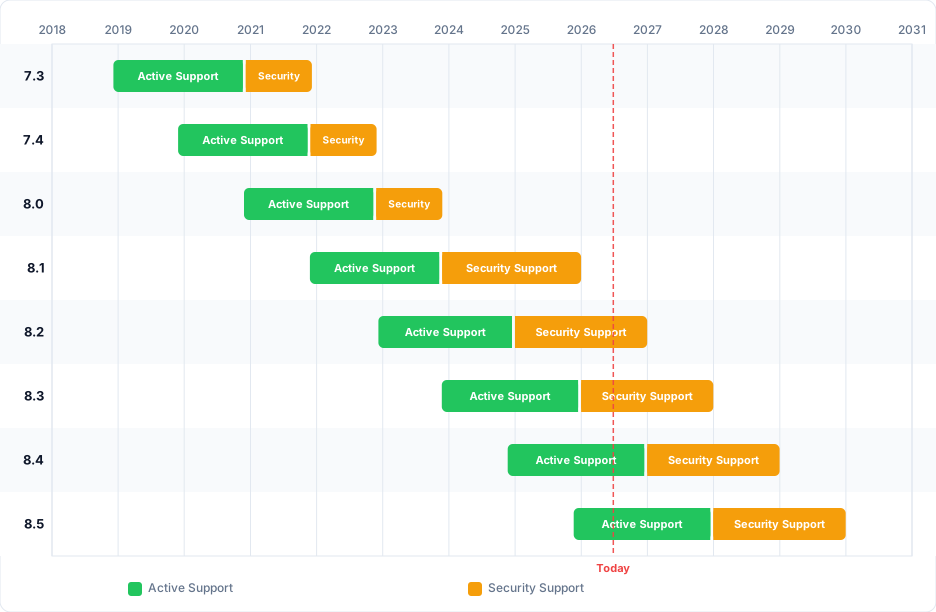
All versions
| Version | Released | Active Support | Security Support | Latest |
|---|---|---|---|---|
|
8.5
|
20 Nov 2025 |
31 Dec 2027
Ends in 1 year, 3 months
|
31 Dec 2029
Ends in 3 years, 3 months
|
8.5.10
27 Aug 2026
|
|
8.4
|
21 Nov 2024 |
31 Dec 2026
Ends in 3 months, 1 week
|
31 Dec 2028
Ends in 2 years, 3 months
|
8.4.25
27 Aug 2026
|
|
8.3
|
23 Nov 2023 |
31 Dec 2025
Ended 8 months, 4 weeks ago
|
31 Dec 2027
Ends in 1 year, 3 months
|
8.3.33
30 Jul 2026
|
|
8.2
|
08 Dec 2022 |
31 Dec 2024
Ended 1 year, 8 months ago
|
31 Dec 2026
Ends in 3 months, 1 week
|
8.2.33
30 Jul 2026
|
|
8.1
|
25 Nov 2021 |
25 Nov 2023
Ended 2 years, 10 months ago
|
31 Dec 2025
Ended 8 months, 4 weeks ago
|
8.1.34
18 Dec 2025
|
|
8.0
|
26 Nov 2020 |
26 Nov 2022
Ended 3 years, 10 months ago
|
26 Nov 2023
Ended 2 years, 10 months ago
|
8.0.30
03 Aug 2023
|
|
7.4
|
28 Nov 2019 |
28 Nov 2021
Ended 4 years, 10 months ago
|
28 Nov 2022
Ended 3 years, 10 months ago
|
7.4.33
03 Nov 2022
|
|
7.3
|
06 Dec 2018 |
06 Dec 2020
Ended 5 years, 9 months ago
|
06 Dec 2021
Ended 4 years, 9 months ago
|
7.3.33
18 Nov 2021
|
About PHP
First released in 1995, PHP now runs on the majority of websites with a known server-side language, powering everything from WordPress and Drupal installations to enterprise platforms handling billions of requests a day. That scale of deployment is exactly what makes PHP end of life dates matter. The W3Techs usage statistics report shows that PHP is used by more than 70% of all websites as a server-side programming language. It also shows that PHP version 7.x is still used by 30% of all those PHP-based websites. This is a huge number of production systems running a branch that has not received security patches for years.
PHP Support Lifecycle Explained
Each PHP release branch gets four years of official support, split into two phases. The first two years are Active Support: the branch receives regular point releases with both bug fixes and security patches. The next two years are Security Support: only critical security issues get patched, releases are irregular and issued only as needed, and there are no more bug fixes or compatibility updates. After four years, the branch reaches End of Life and receives nothing further, regardless of severity.
This four-year window is a March 2024 extension of PHP's previous three-year policy (2 years active + 1 year security). Only PHP 8.1 and later fall under the extended cycle; older branches kept their original three-year lifespan. PHP ships one new feature version per year, typically in November, so three or four versions are usually in active or security support at once.
Security Risks of Running EOL PHP
Once a PHP version reaches end of life, the PHP project stops shipping updates of any kind for it, including fixes for newly disclosed vulnerabilities. Any CVE found in an EOL branch after that date stays open indefinitely, and PHP does see regular CVE activity: 15 vulnerabilities were disclosed in 2025, and 15 more have already been found in 2026, with only supported branches receiving fixes. The average severity has climbed too, this year's vulnerabilities are scoring notably higher on average than last year's, which raises the stakes for anything left unpatched. Running an EOL version doesn't stop an application from working, but it does mean the runtime underneath it is an unpatched, permanently open attack surface.
Frequently Asked Questions
Is PHP end of life?
No. PHP itself isn't end of life, and it isn't going anywhere; it still powers the majority of the web. What reaches end of life are individual version branches on a rolling schedule. Currently supported branches are being maintained; older ones like 7.4, 8.0, and 8.1 have already stopped receiving patches.
What is PHP end of life schedule?
PHP retires one branch roughly every year as new versions ship. Each branch gets two years of active support followed by two years of security-only support (three years total for versions before 8.1), then it's retired for good.
Is PHP outdated in 2026?
The language itself isn't. Modern PHP (8.x) is typed, JIT-compiled, and used by major production platforms today. The "PHP is outdated" perception usually comes from teams still running old, EOL branches like 7.4 or earlier, which have in fact lost patch support and do carry real security debt.
Does running an EOL PHP version cause compliance problems?
Yes, it can. Frameworks like PCI DSS, SOC 2, and HIPAA generally require timely application of security patches to production systems. If a PHP branch is EOL, there's no official patch to apply when a new vulnerability surfaces, which auditors typically treat as a compliance gap unless you have an extended security support in place.