
Laravel End of Life - Dates and Lifecycle
Laravel is a PHP web application framework known for its expressive syntax, built-in tooling for routing, ORM, and queues, and a large first-party ecosystem.
Last updated 6 September 2026
25
Versions tracked
15
At EOL
10
Supported
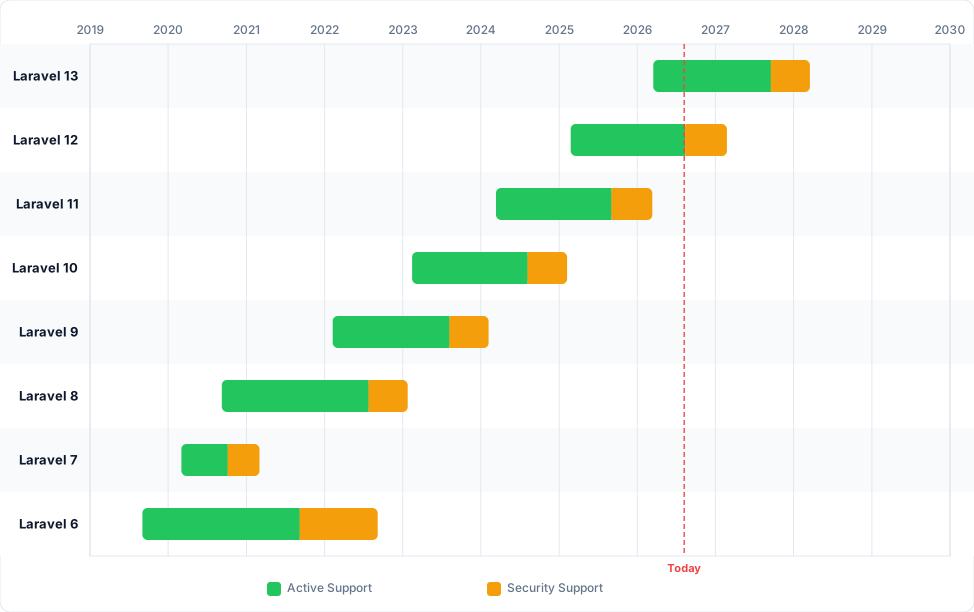
All versions
| Version | Released | Active Support | Security Support | Latest |
|---|---|---|---|---|
|
13
|
17 Mar 2026 |
17 Sep 2027
Ends in 12 months
|
17 Mar 2028
Ends in 1 year, 5 months
|
13.32.0
15 Sep 2026
|
|
12
|
24 Feb 2025 |
13 Aug 2026
Ended 1 month, 1 week ago
|
24 Feb 2027
Ends in 5 months
|
12.69.2
08 Sep 2026
|
|
11
|
12 Mar 2024 |
03 Sep 2025
Ended 1 year ago
|
12 Mar 2026
Ended 6 months, 2 weeks ago
|
11.56.1
25 Aug 2026
|
|
10
|
14 Feb 2023 |
07 Aug 2024
Ended 2 years, 1 month ago
|
04 Feb 2025
Ended 1 year, 7 months ago
|
10.50.3
11 Aug 2026
|
|
9
|
08 Feb 2022 |
08 Aug 2023
Ended 3 years, 1 month ago
|
06 Feb 2024
Ended 2 years, 7 months ago
|
9.52.22
11 Aug 2026
|
|
8
|
08 Sep 2020 |
26 Jul 2022
Ended 4 years, 1 month ago
|
24 Jan 2023
Ended 3 years, 8 months ago
|
8.83.29
20 Nov 2024
|
|
7
|
03 Mar 2020 |
06 Oct 2020
Ended 5 years, 11 months ago
|
03 Mar 2021
Ended 5 years, 6 months ago
|
7.30.7
12 Nov 2024
|
|
6
|
03 Sep 2019 |
07 Sep 2021
Ended 5 years ago
|
06 Sep 2022
Ended 4 years ago
|
6.20.45
12 Nov 2024
|
About Laravel
Laravel has been one of the dominant PHP frameworks since its 2011 debut, prized for its expressive syntax and a large first-party ecosystem covering everything from routing and queues to front-end scaffolding and deployment.
Laravel Lifecycle Explained
Laravel ships a new major version roughly once a year, typically in the first quarter, with minor and patch releases as often as weekly. Under the current, unified policy, every release gets 18 months of Active Support (bug fixes) and 2 years of Security Support from its release date, regardless of version number. This wasn't always the case: Laravel 5.5 and 6 were designated LTS releases under an older policy, receiving noticeably longer windows, roughly 2 years of active support and 3 years of security support. That separate LTS tier was dropped starting with Laravel 7, and every release since has followed the same standardized 18-month and 2-year schedule.
PHP Compatibility by Laravel Version
| Laravel Version | Supported PHP Versions |
|---|---|
| 13 | 8.3, 8.4, 8.5 |
| 12 | 8.2, 8.3, 8.4, 8.5 |
| 11 | 8.2, 8.3, 8.4 |
| 10 | 8.1, 8.2, 8.3 |
| 9 | 8.0, 8.1, 8.2 |
| 8 | 7.3, 7.4, 8.0, 8.1 |
| 7 | 7.2, 7.3, 7.4, 8.0 |
| 6 | 7.2, 7.3, 7.4 |
| 5.8 | 7.1, 7.2, 7.3, 7.4 |
| 5.7 | 7.1, 7.2, 7.3, 7.4 |
| 5.6 | 7.1, 7.2, 7.3, 7.4 |
| 5.5 | 7.0, 7.1, 7.2 |
| 5.4 | 5.6, 7.0, 7.1 |
| 5.3 | 5.6, 7.0 |
| 5.2 | 5.5, 5.6, 7.0 |
| 5.1 | 5.5, 5.6, 7.0 |
| 5.0 | 5.4, 5.5, 5.6 |
Frequently Asked Questions
Is Laravel 10 end of life?
Yes. Laravel 10's Security Support ended in February 2025, and it no longer receives any updates, security fixes included.
Is Laravel still relevant in 2026?
Yes, it remains one of the most widely used PHP frameworks, with Laravel 13 as the current major version and a regular annual release cadence.
Will Laravel have a future?
There's no indication otherwise. Laravel continues to ship new major versions on a predictable yearly schedule and maintains an active first-party ecosystem, both signs of continued investment rather than a project winding down.
Is Laravel outdated?
No, the actively maintained recent versions are current and regularly updated. As with any framework, specific older versions, like Laravel 8 or earlier, are genuinely outdated in the sense that they're past end of life, but that's a version-specific issue, not a statement about Laravel as a whole.