
CentOS End of Life - Dates and Lifecycle
CentOS Linux was a free, community-rebuilt version of Red Hat Enterprise Linux, once one of the most widely deployed server operating systems, now fully discontinued in favor of CentOS Stream.
Last updated 8 August 2026
4
Versions tracked
4
At EOL
0
Supported
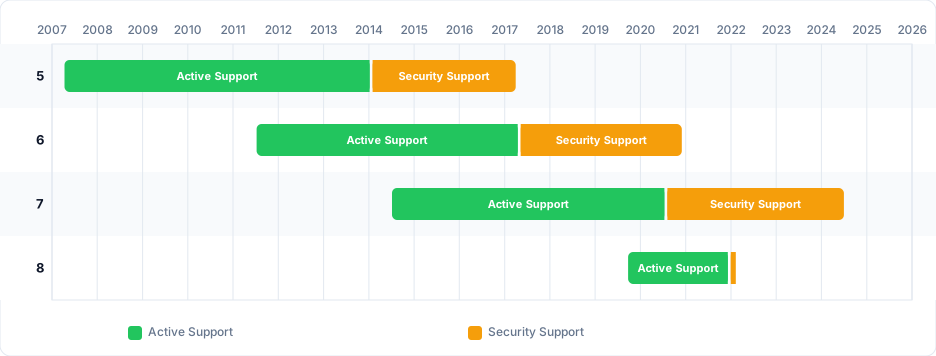
All versions
| Version | Released | Full Support | Maintenance Support | Latest |
|---|---|---|---|---|
|
8
|
24 Sep 2019 |
31 Dec 2021
Ended 4 years, 8 months ago
|
31 Dec 2021
Ended 4 years, 8 months ago
|
8 (2111)
16 Nov 2021
|
|
7
|
07 Jul 2014 |
06 Aug 2020
Ended 6 years, 1 month ago
|
30 Jun 2024
Ended 2 years, 2 months ago
|
7 (2009)
12 Nov 2020
|
|
6
|
10 Jul 2011 |
10 May 2017
Ended 9 years, 4 months ago
|
30 Nov 2020
Ended 5 years, 10 months ago
|
6.10
03 Jul 2018
|
|
5
|
12 Apr 2007 |
31 Jan 2014
Ended 12 years, 8 months ago
|
31 Mar 2017
Ended 9 years, 6 months ago
|
5.11
30 Sep 2014
|
About CentOS
CentOS Linux is fully end of life. Its last supported release, CentOS Linux 7, stopped receiving updates on June 30, 2024, and there will be no CentOS Linux 9 or any future release to follow it. That makes CentOS different from most products on this site: this isn't a question of which version is current, it's that the entire distribution as most people knew it has been discontinued.
CentOS Lifecycle Explained
The shift happened abruptly. On December 8, 2020, Red Hat and the CentOS Project announced they were redirecting all investment toward CentOS Stream, a rolling-release upstream development platform for RHEL, and winding down CentOS Linux, the traditional, fixed-release rebuild of RHEL that most production servers were actually running. CentOS Linux 8 had originally been promised support through 2029; the announcement cut that down to December 31, 2021, giving affected organizations barely a year of notice. CentOS Linux 7, which had already been in production far longer, was allowed to run out its originally planned lifecycle alongside RHEL 7, ending June 30, 2024. CentOS Linux 6 had already reached end of life earlier, on November 30, 2020.
With CentOS Linux 7's end of life, the CentOS Linux era is over. The project's continuation is CentOS Stream, but that's a genuinely different product with a different release model and support policy, worth its own dedicated look rather than folding into this page. See our CentOS Stream page for how it works and whether it's a fit for what CentOS Linux used to cover.
For systems still running an end of life CentOS version, there's no official patch path left. Options at this point are: migrate to Red Hat Enterprise Linux directly (Red Hat offers a conversion program specifically for former CentOS Linux users), move to a RHEL-compatible community rebuild like Rocky Linux or AlmaLinux, or adopt commercial extended lifecycle support from a third-party vendor as a stopgap while a migration is planned. Simply leaving an EOL CentOS system running with no plan means every vulnerability discovered from this point forward stays open indefinitely.
Frequently Asked Questions
Is CentOS end of life?
Yes. CentOS Linux is completely end of life, with no further releases planned. The last supported version, CentOS Linux 7, stopped receiving updates on June 30, 2024.
When did CentOS 7 go end of life?
CentOS Linux 7 reached end of life on June 30, 2024, matching the end of RHEL 7's maintenance lifecycle, since CentOS Linux releases tracked their corresponding RHEL version.
Why did CentOS 8 go end of life before CentOS 7?
CentOS 8 wasn't originally supposed to end first, it was promised support through 2029. Red Hat's December 2020 decision to shift focus to CentOS Stream cut that short, moving CentOS 8's end of life up to December 31, 2021, years earlier than users had planned for.
Is CentOS 7 still supported?
No. There's no official support, security patches, or updates available for CentOS 7 as of its June 30, 2024 end of life date. Continued use requires either a migration to a supported operating system or a commercial extended support contract from a third-party provider.